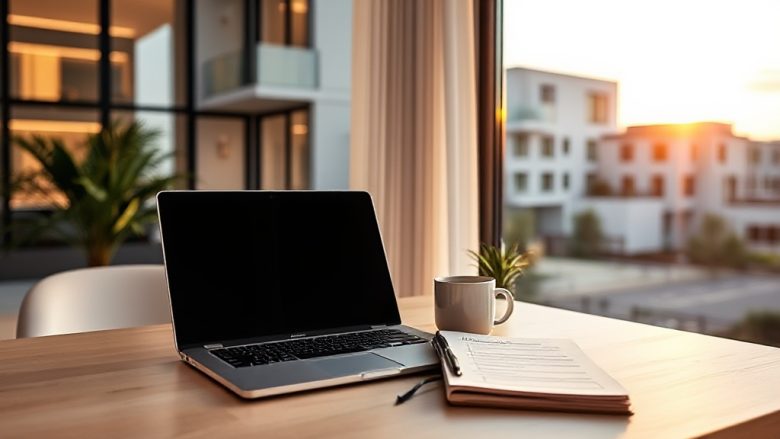
Working from home sounds like a dream until you’re three hours into a Tuesday, still in yesterday’s socks, and somehow both exhausted and behind. I know this because I lived it. My first year of remote work was a slow slide into chaos: laundry on the desk, lunch at 3pm, Slack messages answered at midnight because I’d forgotten what a boundary felt like. The fantasy promised freedom. The reality delivered a fridge that never stopped calling my name.
What finally changed things wasn’t a new app or a productivity guru. It was a checklist. Not a rigid military schedule, just a short set of moves I could run through each day to keep work contained and my brain reasonably intact. If you want to know how to stay productive working from home without turning your flat into a call centre, this is the framework that worked for me. Take what fits, leave the rest, and adjust it to your own rhythm.
Why Productivity at Home Falls Apart (And Why Checklists Help)
Offices do a lot of invisible work for us. They create a commute that separates home brain from work brain. They put other people around us who are visibly working, which nudges us to do the same. They make leaving at 5pm feel normal. At home, all of that scaffolding disappears at once, and most of us replace it with nothing.
The result is a strange blend of overwork and underwork. You check email while making coffee, then spend the afternoon wondering why you can’t focus. You take a call in the kitchen, then feel like you never left the kitchen. The day blurs because nothing marks its edges.
A checklist works because it externalises the scaffolding. It doesn’t rely on willpower or motivation, both of which are unreliable houseguests. It gives you a small number of concrete actions that anchor the day, and it lets you stop negotiating with yourself about whether to do them. You just do the next thing on the list.
The checklist below is grouped into morning, afternoon, and end-of-day. I’ve kept it short on purpose. A checklist you’ll actually use beats a perfect one you’ll abandon by Wednesday.
The Morning Checklist: Set the Frame Before the Inbox Does
Mornings decide the shape of the day. If the first thing you do is open email, you’ve handed your agenda to whoever wrote to you overnight. Here’s what to do instead.
Get up and get dressed properly. Not a suit. Not gym clothes you slept in. Just clean clothes you’d be willing to answer the door in. This sounds trivial, and it is, until you notice how differently you sit at the desk when you’re not in pyjama bottoms. The point isn’t formality. It’s a sensory signal that the working day has started.
Leave the house, even briefly. A ten-minute walk before you sit down does more for focus than a second coffee. It gives your brain a transition that the commute used to provide. If the weather is grim, stand outside the front door for two minutes. The bar is low. The effect is real.
Write down the three things that would make today a win. Three, not ten. Not a full project plan. Just the three tasks that, if completed, would let you close the laptop feeling okay. Put them somewhere visible. When the day goes sideways, this list is what you come back to.
Set up your workspace before you start. Clear the mugs. Wipe the crumbs. Move the pile of post you’ve been ignoring. A cluttered desk is a hundred tiny distractions waiting to happen. It takes ninety seconds and saves you from a morning of low-grade irritation.
Decide when you’ll stop. This is the step most people skip, and it’s the one that protects everything else. Before you open a single tab, pick an end time. Write it down. If you don’t choose it in the morning, the day will choose it for you, and it will choose badly.
None of this takes more than twenty minutes. Done consistently, it turns a shapeless morning into a working day with an actual beginning.
The Afternoon Checklist: Protect Your Focus When Energy Dips
After lunch, the day gets slippery. Energy drops, notifications pile up, and the temptation to “just quickly check” something turns into forty minutes of scrolling. The afternoon checklist is about defending the middle of the day.
Do one block of deep work before you touch messages. Pick the hardest task on your three-item list and give it a focused stretch, ideally forty-five to ninety minutes. Close the chat app. Put the phone in another room, not face-down on the desk where it can still buzz. If you can’t fully disconnect, set a status that says you’re heads-down and mean it.
Batch your communication. Instead of answering every ping as it lands, pick two or three windows a day for messages and email. Mid-morning and mid-afternoon work well for most people. This single change did more for my output than any productivity tool I’ve tried. It also reduces the low-level anxiety of an always-open inbox.
Take a real break, away from screens. Not a break where you scroll. A break where you stand up, move, eat something that isn’t a biscuit, or stare out of a window. Ten minutes of genuine rest restores more focus than thirty minutes of half-resting with a phone in your hand.
Watch the snack-and-scroll spiral. Home working makes grazing easy, and sugar crashes make the afternoon worse. Keep water within reach. If you need a snack, take it away from the desk so eating doesn’t become another thing you do while half-working.
Re-check your three things. Around 3pm, look at your morning list. What’s done? What’s realistic? What needs to move to tomorrow? Adjusting the plan isn’t failure. Pretending you’ll finish everything is.
End-of-Day Checklist: Close the Laptop and Actually Close the Day
This is the part I got wrong for months. Without a commute, there’s no natural full stop, so work bleeds into the evening until every room feels like the office. The end-of-day checklist is what stops that.
Stop at the time you chose in the morning. Not when the work is done, because the work is never done. At the time you picked. This is a boundary, and boundaries only work if they’re enforced by you, not by your employer’s calendar.
Write tomorrow’s first task. Before you close down, note the single thing you’ll start with in the morning. It takes a minute and it removes the blank-page dread that otherwise greets you at 9am.
Tidy the workspace. Put the laptop somewhere you can’t see it from the sofa. Clear the desk. If you work at the kitchen table, pack everything away so dinner doesn’t happen on top of your spreadsheets. Physical separation matters more than people admit.
Do a short shutdown ritual. Make a cup of tea, change your clothes, step outside, or listen to one song. Anything that reliably signals “work is over.” The ritual matters less than the repetition. After a couple of weeks, your brain starts to use it as a switch.
Leave the phone out of the bedroom. If you can manage it, this is the single biggest upgrade to your evenings. Checking email at 11pm undoes the boundary you spent all day protecting.
A Short Note on Burnout and Knowing When to Ease Off
Productivity advice has a dark side. Pushed too hard, it becomes a machine for extracting more from yourself, and remote workers are especially vulnerable because the office never closes. If you find yourself working longer hours, sleeping worse, snapping at people you like, or feeling flat about work you used to enjoy, that’s not a discipline problem. That’s a warning.
The checklist is a tool, not a test. Some weeks you’ll hit every item and feel great. Other weeks you’ll do the morning walk and nothing else, and that has to be allowed. If you’re heading toward burnout, the fix is rarely more structure. It’s usually less work, more rest, and a conversation with whoever needs to hear it. Take a proper day off. Say no to something. Protect your sleep like it’s a meeting you can’t move.
The goal isn’t to become a productivity machine. It’s to do good work without losing your evenings, your weekends, and your patience. A checklist that helps you do that is working. A checklist that makes you feel guilty is just another inbox.
Frequently Asked Questions
How do I stay productive when I keep getting distracted at home?
Start by removing the distraction rather than resisting it. Put your phone in another room, close unrelated tabs, and work in focused blocks of forty-five to ninety minutes. Then take a proper break. Most distraction isn’t a character flaw, it’s an environment problem, and it’s easier to change the environment than to change yourself.
What should I do if I can’t switch off after work?
Build a shutdown ritual and stick to it. Pick a fixed end time, tidy your workspace, put the laptop out of sight, and do something small that signals the day is over. If you’re still thinking about work an hour later, write down the loose ends so your brain can stop holding them. Boundaries are habits, not decisions.
Is it better to follow a strict schedule or a flexible one?
Flexible, as long as it has fixed edges. Anchor your start time, your end time, and one or two focus blocks, then let everything in between move around. A rigid schedule collapses the first time something unexpected happens. A completely open day collapses into nothing. The middle ground is a short checklist you run every day.
Start with the morning items tomorrow. Add the afternoon and evening ones when they feel natural. Within a couple of weeks, the day will have a shape again, and you’ll wonder how you worked any other way.