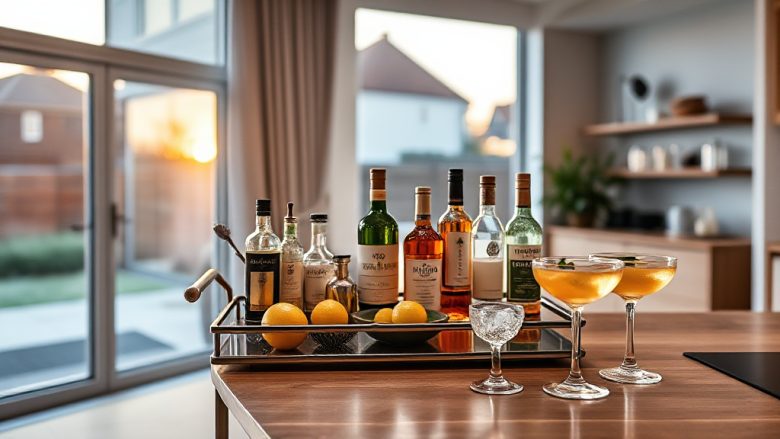
Making cocktails at home is one of those ideas that sounds effortless until you’re standing in a supermarket aisle staring at a wall of bottles. You want a proper drink at the end of the week, something better than a warm gin and tonic, but you don’t want to spend eighty pounds on equipment you’ll use twice. That’s the real problem. Not the drinking. The starting.
This complete guide to home cocktails in the UK is written for exactly that moment. It assumes you’re a beginner, you live in Britain, and you want a small, sensible setup that actually works. No professional bar, no obscure ingredients you’ll never finish, no advice borrowed from American bartending books that assume you can buy a litre of overproof rum at the corner shop. Just the equipment, spirits, mixers and small practical details that matter here.
What You Actually Need Before You Buy a Single Bottle
The temptation is to buy everything at once. Resist it. A home bar grows better than it arrives.
Start with four pieces of equipment. A shaker, ideally a three-piece Boston or a cobbler shaker with a built-in strainer. A jigger, because guessing pours is how drinks turn out either watery or overwhelming. A bar spoon for stirring, which matters more than beginners expect. And a decent strainer if your shaker doesn’t have one. That’s it. You can make a surprising number of classic drinks with those four things.
Glassware is where people overspend. You don’t need a full set. A few tumblers, a couple of coupe or martini glasses, and a highball or two will cover almost everything in this guide. Charity shops in the UK are genuinely excellent for this. So are supermarket homeware aisles, where a set of four glasses often costs less than a single branded cocktail glass.
Skip the ice crusher, the cocktail smoker and the fancy mixing glass for now. Buy them later if you find yourself wanting them. Most home bartenders never do.
Spirits: A Small, Sensible Core Collection
A good home bar isn’t a big one. It’s a focused one. Five bottles will make you more drinks than fifteen random ones.
Start with a decent gin. The UK has an extraordinary range now, from London dry styles to softer coastal gins, and a mid-priced bottle around twenty to thirty pounds is more than good enough for mixed drinks. Next, a white rum, which handles daiquiris, mojitos and a dozen variations. Then a bourbon or a blended Scotch, depending on what you actually like drinking. Add a tequila if you enjoy it, and a bottle of sweet vermouth for martinis and negronis.
Vermouth is the one people forget and then regret. It’s a wine-based product, so it goes off. Buy a small bottle, keep it in the fridge, and use it within a few weeks. A neglected vermouth will quietly ruin every drink it touches.
On price, there’s a real argument for spending slightly more on the base spirit and less on everything else. Cheap spirits taste cheap even through mixers. But there’s no need to chase premium bottlings for cocktails. The middle of the shelf is where the value sits.
Mixers, Syrups and the Small Things That Make a Difference
Mixers are straightforward. Good tonic, soda water, ginger beer, cola and a decent orange juice will cover most of what you’ll want to make. Buy tonic in small bottles rather than large ones, because opened tonic goes flat fast and flat tonic is genuinely unpleasant.
Fresh citrus is non-negotiable. Bottled lemon and lime juice is a shortcut that shows in the glass. Buy real lemons and limes, and use them within a few days. A single lime will make two or three drinks, so it’s not an expensive habit.
You’ll also want sugar syrup, which you can make at home in about five minutes by dissolving equal parts sugar and hot water. Keep it in a clean jar in the fridge. Beyond that, a bottle of Angostura bitters, some fresh mint when you need it, and a bag of ice. Ice matters more than most beginners realise. Small, wet ice dilutes drinks quickly. If you can, buy a bag of larger cubes or make them in trays and let them sit for a day so they’re properly hard.
UK-Specific Things Worth Knowing
British home bartending has its own quirks, and ignoring them makes life harder.
Alcohol duty in the UK is charged by strength, which means higher-ABV spirits cost proportionally more. This is one reason a 37.5% gin is often noticeably cheaper than a 43% one. For mixed drinks, the difference rarely matters. Buy the lower-strength bottle if the price gap is significant and you’re using it in cocktails.
Availability varies more than people expect. Supermarkets carry a solid core range, but specialist bottles often come from independent off-licences or online retailers. If you live somewhere without a good drinks shop, plan ahead rather than assuming you’ll find something specific on the day.
Measurements trip up a lot of beginners. UK recipes sometimes use millilitres, sometimes parts, and older books use fluid ounces. A jigger with both ml and oz markings solves this permanently. And remember that a UK pint is 568ml, not the 473ml used in the US, which matters if you’re scaling a punch recipe.
Finally, there’s the weather. British summers are unpredictable, which is a good argument for keeping both a refreshing highball option and a warming stirred drink in your repertoire. You’ll use both in the same month.
Three Beginner Recipes to Start With
These three cover the main techniques: shaking, stirring and building in the glass. Learn them and you’ve learned the shape of most cocktails.
The Daiquiri. Add 60ml white rum, 25ml fresh lime juice and 15ml sugar syrup to a shaker with ice. Shake hard for about twelve seconds, then strain into a chilled coupe. It’s sharp, clean and unforgiving, which makes it a good test of your measurements. If it tastes harsh, you’ve probably under-sweetened it.
The Negroni. Combine equal parts gin, sweet vermouth and Campari, roughly 30ml each, in a mixing glass with ice. Stir for around twenty seconds, then strain over a large ice cube in a tumbler. Stirring rather than shaking keeps it clear and controls the dilution. This is the drink that teaches you why technique matters.
The Gin and Tonic, done properly. Fill a highball with ice, add 50ml gin, then pour 150ml tonic down the side of the glass to preserve the bubbles. Stir once, gently. Garnish with a wedge of lime or a slice of cucumber. The difference between this and a rushed version is mostly the ice and the pour.
A Short Glossary for Confusion-Free Reading
Jigger: a small measuring tool, usually with two cone-shaped ends for different volumes.
Dry shake: shaking ingredients without ice, often used with egg white to build texture before chilling.
Stirred: mixed with ice using a bar spoon, used for spirit-forward drinks where clarity matters.
Built: assembled directly in the serving glass, no shaker required.
Dilution: the water introduced by ice, which is a deliberate part of most cocktails rather than a flaw.
Vermouth: a fortified, aromatised wine, either sweet or dry, used in martinis and negronis.
Frequently Asked Questions
How much does it cost to set up a basic home bar in the UK?
A sensible starting setup, including four pieces of equipment, five bottles and basic mixers, usually lands somewhere between one hundred and one hundred and fifty pounds. You can do it for less by buying glassware second-hand and starting with three spirits instead of five.
Do I need fresh juice, or is bottled juice fine?
Fresh is better, and the gap is noticeable in simple drinks like a daiquiri where citrus is the main flavour. Bottled juice is acceptable in a pinch, but it tastes flatter and slightly cooked. If you’re making cocktails regularly, buy fresh limes and lemons.
How long does an opened bottle of vermouth last?
Once opened, sweet or dry vermouth keeps for roughly four to six weeks in the fridge. After that it starts to taste stale and slightly vinegary. Buying smaller bottles and replacing them regularly makes a real difference to drink quality.
What’s the single most common beginner mistake?
Not measuring. Free-pouring feels confident but produces inconsistent drinks, and inconsistency is what makes home cocktails frustrating. A cheap jigger fixes this immediately and costs almost nothing.