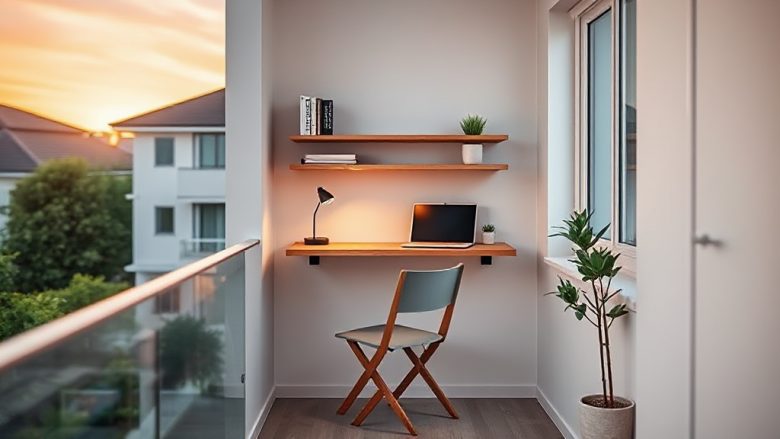
Finding room for a desk in a small flat often feels like a losing battle. The sofa is already doing three jobs, the kitchen table doubles as a laundry sorting station, and the one spare corner is occupied by a bike you refuse to leave outside. Yet working from home isn’t going away, and balancing a laptop on your knees for eight hours is a fast route to a sore back and a scattered mind.
The good news is that home office setup ideas for small spaces have become genuinely clever. Manufacturers now design furniture that folds, tucks, mounts and disappears, and you don’t need a spare bedroom to make one work. What you do need is a clear idea of which type of setup suits your room, your budget and the way you actually work. That’s what this comparison is for — four common space-saving approaches, weighed up honestly, so you can pick the one that fits rather than the one that looks best in a showroom.
Why Small-Space Office Setups Are Different
A home office in a small home isn’t just a smaller version of a normal office. The constraints are different. Every piece of furniture has to justify its footprint, and anything that can’t be packed away eventually becomes clutter. You’re also sharing space with the rest of your life, which means noise, light and sightlines matter as much as desk depth.
There’s a psychological angle too. If your workspace is permanently visible, it’s permanently on your mind. Many people in small flats find they work better when the desk can be closed, folded or hidden at the end of the day. Others prefer everything left out so they can sit down and start immediately. Neither approach is wrong, but knowing which camp you’re in will narrow your options quickly.
Before comparing specific setups, measure two things: the widest clear wall or corner you can realistically use, and the distance from that spot to a power socket. A gorgeous folding desk is useless if the nearest plug is behind the sofa on the other side of the room.
Wall-Mounted Desks: Maximum Floor, Minimum Fuss
A wall-mounted desk is essentially a shelf with ambitions. It bolts to the wall at sitting height, leaving the floor completely clear underneath. In a studio flat or a narrow box room, that cleared floor is worth more than the desk itself.
Space: The best option if floor space is your scarcest resource. You can park a chair under it, slide a storage box beneath, or leave the area open so the room still feels like a room.
Cost: Ranges from a simple bracket-and-board DIY job to a fitted floating desk with drawers. The DIY route is the cheapest desk solution in this whole comparison, assuming you’re comfortable drilling into a wall.
Comfort: This is where wall desks can disappoint. Many are shallow, often around 40cm deep, which is fine for a laptop but cramped for a monitor plus keyboard. Height is fixed, so if it’s mounted at the wrong level you’ll feel it in your shoulders by mid-afternoon.
Flexibility: Low. Once it’s up, it stays up. You can’t move it to another room on a whim, and renters need landlord permission before putting holes in the wall.
Wall-mounted desks suit people who work mainly on a laptop, have a permanent spot in mind, and value an uncluttered floor above all else. If you use a large monitor or like spreading paperwork out, look elsewhere.
Folding Tables and Drop-Leaf Desks: The Disappearing Act
Folding desks are the compromise most small-space workers eventually land on. The desk surface hinges down against the wall when you’re finished, or the legs fold flat so the whole thing slides behind a door or under a bed.
Space: Excellent when folded, decent when open. A typical drop-leaf desk gives you 80–100cm of width, which is enough for a laptop, a notebook and a mug. The catch is that you need clear wall space in front of it while it’s in use, so it can’t be tucked into a tight alcove.
Cost: Generally mid-range. Cheaper folding tables exist, but the hinges and brackets on budget models tend to loosen after a year of daily opening and closing. Paying a little more for solid hardware is usually worth it.
Comfort: Better than a wall shelf because most folding desks are full depth, often 50–60cm. You can fit a proper monitor and still have room for your hands. Stability varies — a wobbly folding desk is genuinely unpleasant to type on, so test the mechanism if you can.
Flexibility: High. You can move it between rooms, take it with you when you move flat, and reclaim the space entirely when guests visit. For renters, this is often the deciding factor.
The main downside is routine. If you’re the kind of person who leaves a folded desk folded for three weeks and works from the sofa instead, you’ve bought furniture you won’t use. Folding setups reward discipline.
Corner Units: Using the Space Nobody Else Wants
Every room has a corner that’s awkward for anything else. A corner desk turns that dead zone into a surprisingly generous workspace, because the diagonal surface gives you more usable area than the same footprint along a straight wall.
Space: Efficient in a specific way. A corner unit uses floor area that would otherwise hold a plant or a pile of boxes. It does, however, block the corner permanently, and corner desks are often bulkier than they look in photographs.
Cost: Wide range. Basic L-shaped corner desks are affordable, while fitted corner units with shelving climb quickly. The cheap ones are often the heaviest, which matters if you ever need to move them.
Comfort: The best of the four for longer working days. You get depth, width, and often room for a second monitor. Many corner desks include a raised shelf that lifts the screen to eye level without a separate stand.
Flexibility: Low to moderate. It occupies its corner for good, and rearranging the room later becomes harder. It’s also the hardest type to fit into a room with a door swinging into that corner.
Corner units make sense if you’ve claimed a permanent workspace and want it to feel like a proper desk rather than a temporary fix. They’re less suitable for shared rooms where the layout might need to change.
Vertical Storage and the Space Above Your Desk
Whichever desk you choose, the wall above it is free real estate. Ignoring it is the most common mistake in small home offices, and fixing it costs far less than buying more furniture.
A single shelf at head height holds printer paper, a router, books and a box of cables. A pegboard or a strip of hooks keeps headphones, pens and charging leads off the desk surface, which matters more than it sounds — clutter on a small desk eats working room fast. If you’re renting and can’t drill, freestanding shelving that straddles the desk works nearly as well, though it does take floor space back.
The rule worth remembering: go up, not out. A tall narrow bookcase holds more than a wide low one and leaves the floor beneath it usable. The same logic applies to filing — a vertical document tray takes a fraction of the desk area of a horizontal pile.
Lighting belongs in this category too. A slim wall light or a clamp-on lamp attached to a shelf frees the desk surface that a traditional lamp base would occupy, and it usually lights the work area better.
A Short Buying Checklist Before You Commit
Before you order anything, run through these checks. They take ten minutes and save a lot of returns.
- Measure the wall, the floor and the doorway the furniture has to pass through — flat-pack boxes are bigger than you expect.
- Confirm where your power and internet connections are, and whether you’ll need an extension lead or a longer cable.
- Decide honestly whether you’ll fold the desk away daily, or whether a permanent setup suits you better.
- Check the desk depth against your equipment: laptop only, or monitor plus keyboard?
- If you rent, check what you’re allowed to fix to the walls before choosing a wall-mounted or fitted option.
- Set a budget that includes a decent chair. A cheap desk with a good chair beats the reverse every time.
One more thing worth weighing: buy for the next two years, not the next two months. A desk that’s slightly too small becomes a daily irritation, and replacing furniture in a small flat means finding somewhere to store the old piece while you sell it.
Choosing the Right Setup for Your Space
There’s no single winner here, because the right answer depends on what you’re short of. If floor space is the problem and you work on a laptop, a wall-mounted desk clears the room better than anything else. If you need to reclaim the space entirely at weekends, a folding or drop-leaf desk earns its keep. If you’ve got a stubborn corner and long working days, a corner unit gives you the most comfortable surface for the footprint. And whatever you choose, vertical storage above the desk will make it work harder than a bigger desk would.
The honest test is this: picture your room at 7pm on a Tuesday, after work. If the setup you’re considering would annoy you at that moment — still there, still taking up space, still holding a half-finished mug — pick a different one. The best small-space office isn’t the cleverest design. It’s the one you’ll actually keep using once the novelty wears off.