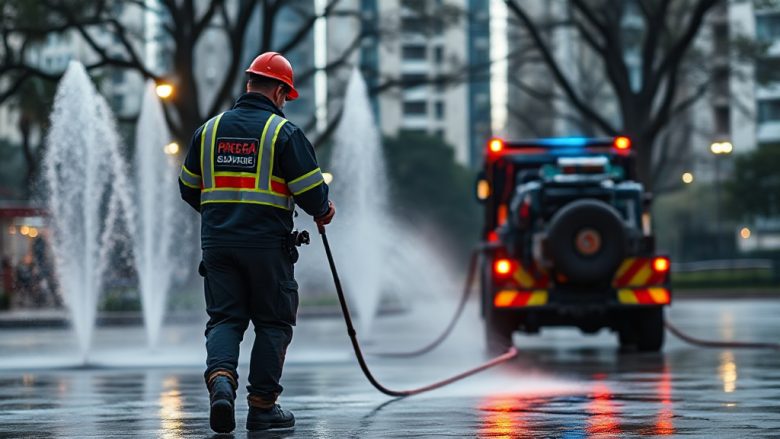
Desentupidora em Parque do Carmo São Paulo SP: What an Experienced User Notices After the First Visit
The second time you call a desentupidora em Parque do Carmo São Paulo SP, you stop judging it by how fast the van arrives and start judging it by whether the same drain blocks again six weeks later. That shift — from relief to pattern recognition — is the real difference between a beginner and an experienced user. The direct answer: an experienced user evaluates a desentupidora by diagnostic method, equipment choice, and whether the technician explains the root cause, not just the price of the unblock.
This review is written from that second-visit perspective. It covers what actually changes once you know the neighborhood’s plumbing quirks, how to compare providers without being upsold, and where the line sits between a quick fix and a proper repair.
Why Parque do Carmo Drains Behave Differently From Downtown São Paulo
Parque do Carmo sits in the eastern zone of São Paulo, a district shaped by a large municipal park, a mix of older horizontal housing and mid-rise condominiums, and a drainage network that has been extended and patched over decades. That history matters. A beginner assumes every clog is grease. An experienced user knows the district’s older stretches can carry root intrusion in clay and concrete laterals, while newer buildings more often suffer from undersized connections or poor fall in the horizontal runs.
The practical consequence is that a provider who only carries a manual auger will solve the symptom and leave the cause. If you have already had the same kitchen line cleared twice in a year, ask what inspection method was used before the second attempt. A camera inspection before and after the work is the single clearest signal that you are dealing with a diagnostic service rather than a plunger with a phone number.
Condominium managers in the area tend to learn this faster than homeowners, because a single blocked riser affects multiple units and generates complaints. That is also why many of them keep a preventive contract rather than calling only in an emergency — a distinction covered further below.
What a Proper Desentupidora Parque do Carmo Visit Should Include
On a first call, most people watch the clock. On a second call, experienced users watch the sequence. A well-run visit follows a predictable order, and any step skipped is a step you will pay for later.
The diagnostic sequence
- Access mapping — the technician identifies every inspection box, cleanout, and floor drain connected to the affected line before starting.
- Blockage location — the obstruction is located, not guessed, usually with a camera or a rodded distance check.
- Method selection — manual auger for a local soft clog, high-pressure water jetting for grease, scale, or roots across a longer run.
- Post-clear verification — flow is tested and, ideally, filmed to confirm the pipe is clear and intact.
- Written findings — a short report stating what was found, what was done, and what to watch.
Step five is where most cheap services quietly fail. If nobody can tell you the pipe diameter, the depth of the blockage, or whether the line is cast iron or PVC, you have bought a temporary unblock, not a diagnosis.
Equipment that separates a fix from a patch
An experienced user asks one question before booking: what equipment will arrive? A rotary auger handles a localized soft blockage in a branch line. A high-pressure hydro-jetting unit is what you want for grease accumulation, soap scale, and root masses in horizontal runs, because it scours the pipe wall instead of punching a hole through the middle of the clog. For sanitary sewage lines, the difference shows up within weeks.
The desentupidora Parque do Carmo context makes this concrete: mixed housing stock means the same crew may face a 1970s clay lateral in the morning and a modern PVC stack in the afternoon, and the method has to change accordingly. A provider that offers only one technique is telling you something about its limits.
Beginner Assumptions vs. Experienced Expectations
The clearest way to see the gap is side by side. The table below is not about price tiers; it is about what each type of user actually checks.
| Point of comparison | Beginner assumption | Experienced expectation |
|---|---|---|
| Speed of arrival | Fastest van wins | Arrival window is confirmed and the crew is equipped for the actual blockage type |
| Cause of the clog | It is just grease or paper | Cause is identified and documented before clearing |
| Equipment | Any machine will do | Method matches pipe material, diameter, and blockage type |
| Aftercare | Job ends when water drains | Flow is verified and a written finding is provided |
| Recurrence | Bad luck | Repeat blockage is a signal of a structural or design issue |
Notice that none of these rows is about being polite or punctual, though both matter. They are about whether the service produces information you can act on. That is the whole difference.
Emergency Call-Outs, Septic Tanks, and the Cost Trade-Offs Nobody Explains Upfront
Emergency work is where beginners overpay most often, not because the price is unfair but because the scope is unclear. A 24-hour call-out in the eastern zone typically carries a premium for the hour, and that premium is legitimate. What is not legitimate is a base price that quietly excludes jetting, camera inspection, or disposal of removed waste. Ask for the scope in writing before the crew starts, especially after 10 p.m.
Septic tank cleaning is a separate line item that many homeowners in the district confuse with drain unblocking. Emptying a tank is not the same as clearing a pipe, and a provider that treats them as one job will either overcharge or under-serve you. For properties still on septic systems, the experienced rhythm is annual inspection and emptying every two to three years depending on household size — a schedule you can only set if someone actually measured the tank.
Preventive maintenance is the third cost line and the one beginners skip. A quarterly or biannual jetting contract for a restaurant or a large condominium usually costs less over a year than two emergency call-outs, and it removes the weekend premium entirely. The trade-off is commitment: you pay for visits you may not strictly need in a quiet month. For commercial kitchens and multi-unit buildings, that trade is almost always worth it.
For a provider that runs both emergency and scheduled work in the same crew structure, the desentupidora Parque do Carmo São Paulo SP page is a reasonable starting point to compare what is actually included in each service tier.
How to Vet a Provider as an Experienced User Would
Once you have been through two or three call-outs, vetting becomes a short checklist rather than a research project. The goal is not to find the cheapest quote; it is to find the provider whose answers match the physical reality of your building.
- Ask for the method before the price. A provider that quotes without knowing the blockage type is guessing.
- Confirm whether camera inspection is included or extra. It is the difference between a diagnosis and a guess.
- Ask what happens if the blockage recurs within 30 days. A clear warranty answer separates professionals from opportunists.
- Check whether waste removal and disposal are in the quote. Hidden disposal fees are common in emergency work.
- Request the written findings after the job. If they cannot produce them, the service was transactional, not diagnostic.
One more test that experienced users apply quietly: ask the technician what they would do differently if the same line blocked again next month. A confident, specific answer — root cutting, pipe relining, slope correction — tells you they were thinking about the cause. A vague answer tells you they were thinking about the invoice.
The Bottom Line After the Second Visit
The real measure of a desentupidora is not the first unblock. It is whether the second call is for a different drain or the same one. If it is the same one, the first visit failed regardless of how quickly the water went down.
Experienced users in Parque do Carmo stop shopping on arrival time and start shopping on diagnostic discipline: method matched to pipe, cause documented, flow verified, findings written. That standard is not expensive — it is just less common. Once you apply it, the choice becomes straightforward, and the drain stays clear long enough that you forget the van’s phone number. That is the outcome worth paying for.